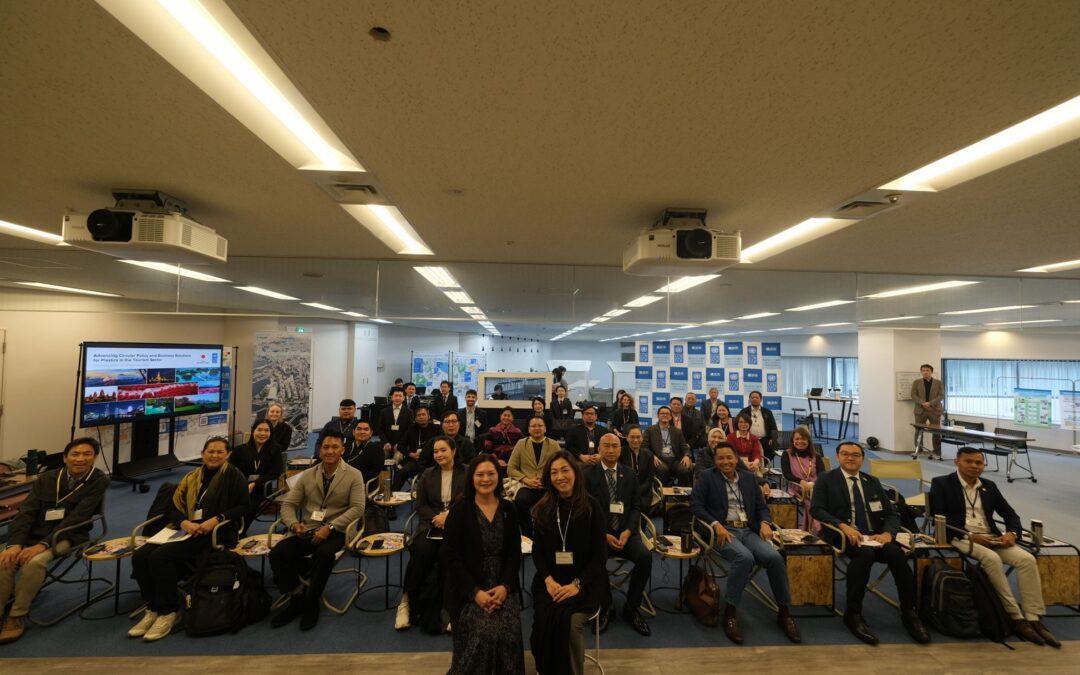
The City of Yokohama hosted “Yokohama Day” Day 3 of the UNDP (United Nations Development Programme)–organized regional workshop “Advancing Circular Policy and Business Solutions for Plastics in the Tourism Sector,” held from February 24 to 27, 2026.
During the event, participants were provided with in-depth insights into how Japan’s national policies are implemented at the local level, and how citizens, businesses, and local government collaborate on the ground to realize a circular society.
🔳Positioning and Background of the Workshop
At the Asian Smart City Conference (ASCC) 2025, the City of Yokohama, together with leaders from Asian cities, called on international organizations and stakeholders to support and endorse the transition of Asian cities toward a circular society. These efforts include providing opportunities for capacity building for city officials and supporting policy development across the region’s municipalities.
In support of this vision, UNDP organized the regional workshop “Advancing Circular Policy and Business Solutions for Plastics in the Tourism Sector” in Yokohama.
Plastic pollution has become a serious challenge in Southeast Asia. While the tourism sector is a major source of single-use plastics, it also has significant potential to accelerate circular initiatives. Against this backdrop, UNDP, with support from the Government of Japan, has been advancing policy enhancement and technology transfer in various countries through the “Global Plastics Innovation Programme – Phase II (GPIP-II)”.
The workshop held in Yokohama was positioned as part of this programme, as well as a follow-up initiative to ASCC 2025. Participants were given a detailed overview of how national policies are translated into local actions, and how citizens, businesses, and governments work together on the ground toward a circular society.
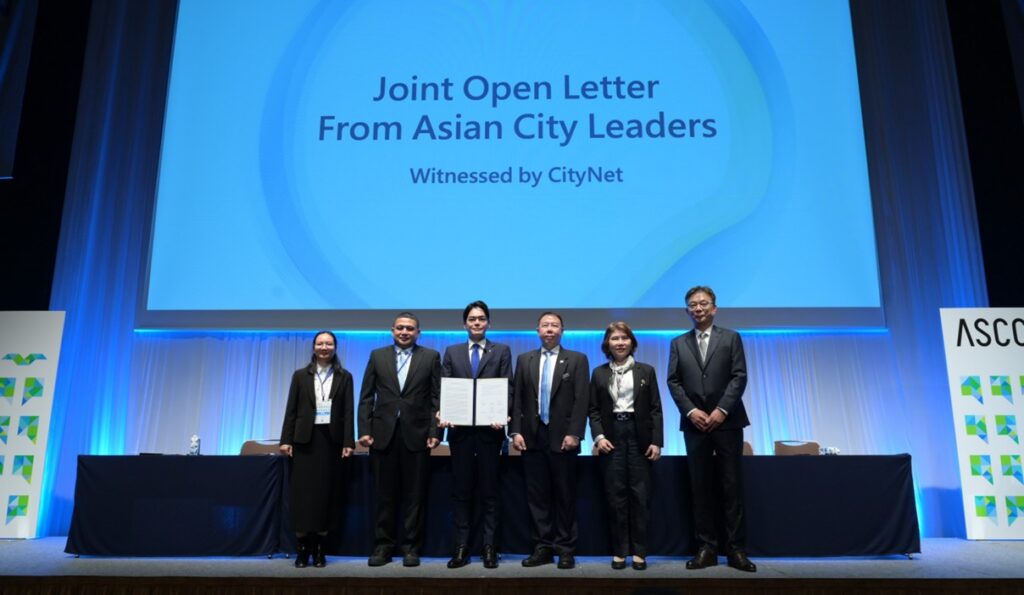
Joint Open Letter at ASCC2025
Programme Overview
- Title: Regional Workshop on Advancing Circular Policy and Business Solutions for Plastics in the Tourism Sector
- Dates: Tuesday, February 24 –February 27, 2026 Yokohama Day: Thursday, February 26, 2026
Programme
- Session 1: Yokohama’s Circular City Vision
- Session 2: Sharing Asian Case Studies and Future Outlook
- Session 3: Practical Cases for Circular Transition through Public–Private Partnerships
- Site Visit: MICE Facility PACIFICO Yokohama
- Technical Lecture: Institutional Frameworks and Technologies for Plastic Resource Circulation
Location: Y-PORT Center Office, GALERIO Yokohama International Organizations Center 6F
- Site Visit to PACIFICO Yokohama
Participants
- UNDP and Countries Side (32 participants)
- Government officials from Cambodia, Indonesia, Laos, the Philippines, Thailand, and Viet Nam, as well as UNDP staff
- City of Yokohama (10 participants)
- International Affairs Bureau; Policy Administration Bureau; Zero Carbon and GREEN×EXPO Promotion Bureau; Resource and Waste Recycling Bureau
- Companies / Organizations (in alphabetical order)
- Yokohama Urban Solution Alliance (YUSA)
- PACIFICO Yokohama
- J&T Recycling Corporation
🔳Session 1
From National Policy to Local Action –Yokohama’s Circular City Vision
Session 1 provided an overview of the evolution of Yokohama’s waste management policies, highlighting key measures and strategic priorities outlined in the forthcoming Medium-Term Plan to support transition toward a circular society.
The Resources and Waste Recycling Bureau presented Yokohama City’s track record of expanding waste segregation systems and enhancing public awareness under the Yokohama G30 Plan, which successfully reduced the volume of waste for incineration and enabled the consolidation of incineration facilities. The transition to the Yokohama 3R Dream Plan was also explained, followed by the current implementation of the Yokohama “Pla 5.3(Waste)” Plan, which includes the first major expansion of plastic resource separation in approximately 20 years. The city emphasized its aim to further promote resource circulation by reducing waste generation in areas closely linked to daily life.
The Policy Administration Bureau explained the policy framework of the Medium-Term Plan 2026–2029 (draft), positioning the “transition to a circular city” as a cross-cutting initiative for Yokohama’s growth and development. Under the concept of “YOKOHAMA CIRCULAR LINK,” policies are structured around six key words: Eat, Create, Engage, Connect, Live, and Visualize, promoting circular initiatives across all stages of production, consumption, and recycling.
The Zero Carbon and GREEN×EXPO Promotion Bureau introduced initiatives in the Minato Mirai 21 district, which has been designated as a decarbonization leading area. These include horizontal “bottle-to-bottle” recycling of PET bottles, production of Sustainable Aviation Fuel (SAF) from used cooking oil, and projects to visualize the status of resource circulation within the district.
An active Q&A session followed, covering topics such as Extended Producer Responsibility (EPR) for packaging recycling, responses to improperly disposed waste, municipal waste collection systems, PET bottle collection schemes, and the current state of greenhouse gas crediting in the waste sector.
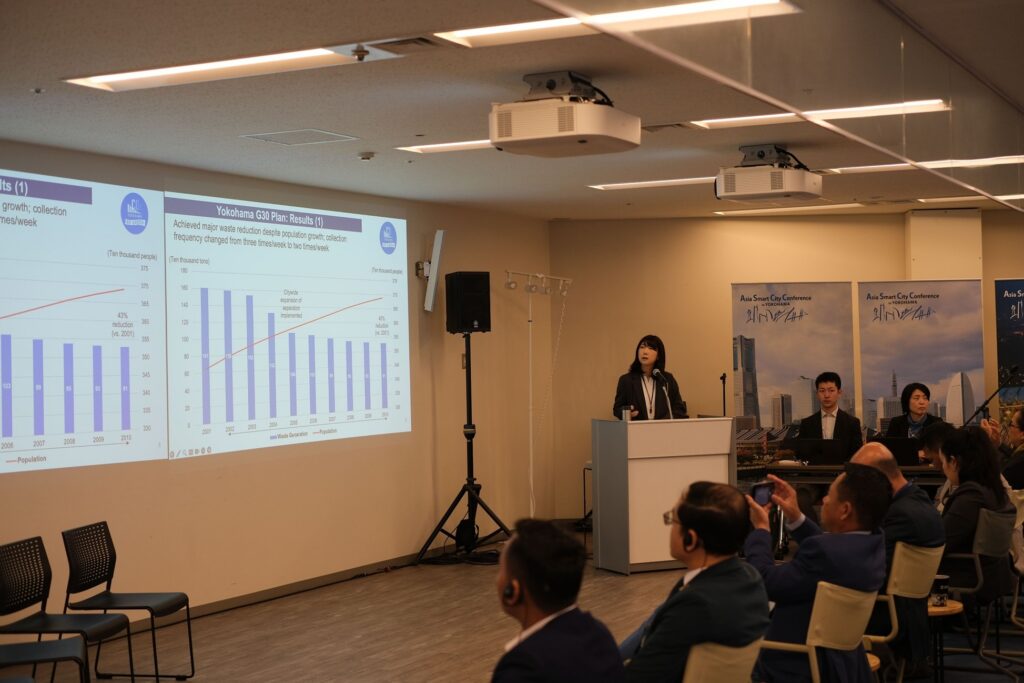
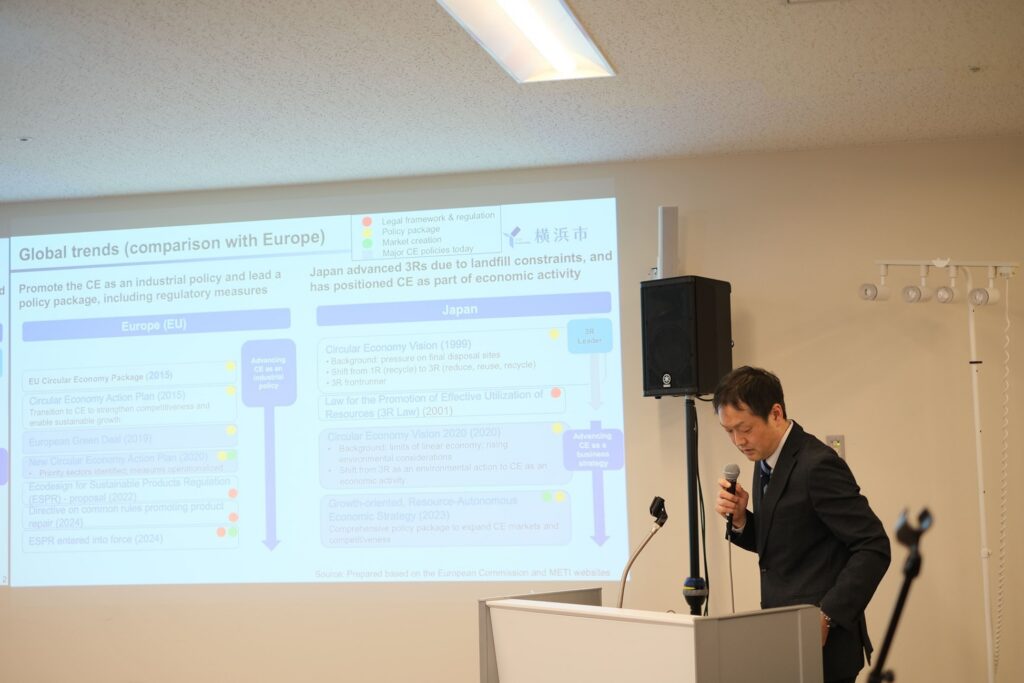
Presentation by Policy Coordination Division, Resources and Waste Recycling Bureau
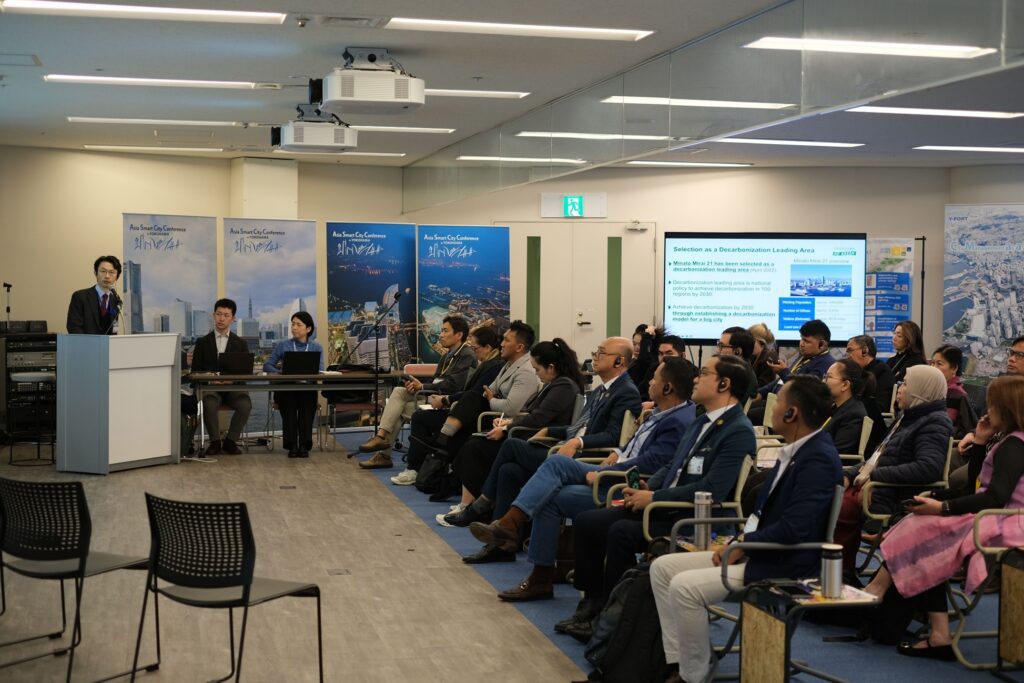
Presentation by Policy Administration Bureau
Presentation by Zero Carbon and GREEN×EXPO Promotion Bureau
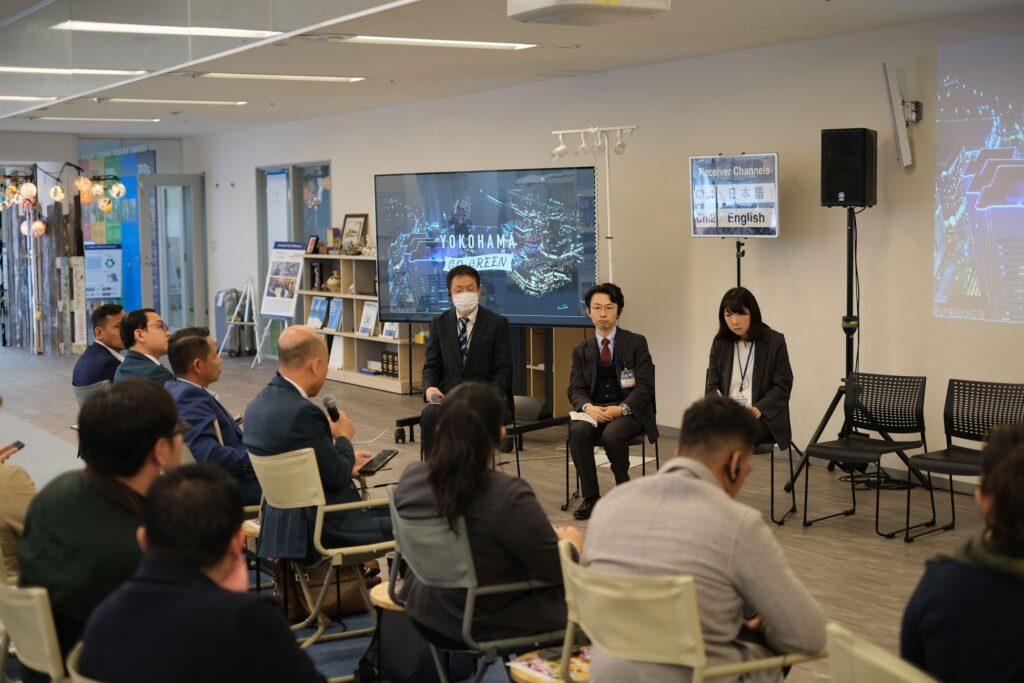
Q&A session of Session 1
🔳Session2
Sharing Asian Case Studies and Future Outlook
Session 2 featured discussions on the transition to a circular society in Asia, with three speakers from Southeast Asian national and local governments presenting advanced initiatives from their respective countries and cities.
Baguio City (the Philippines) introduced an ambitious plan to reduce waste by 80% by 2032 compared to 2024 levels, along with three circular economy programmes.
The Ministry of Tourism of Cambodia presented initiatives such as the Clean City Contest and designation of zones in tourist areas to reduce single-use plastics.
Luang Prabang City (Lao PDR) highlighted the urgent need to improve waste management to protect its value as a World Heritage site amid rapid growth as a tourism city.
The International Affairs Bureau of Yokohama introduced the establishment and future outlook of the Asian Circular Cities Declaration (ACCD), as well as an overview of the Asia-Pacific Circular Cities Forum (APCC-Forum).
YUSA presented its mission as an association founded by Yokohama-based companies, introducing member companies’ technologies and services in the waste sector—such as energy recovery from food waste, environmental education, smart waste bins, and waste to energy—and examples of overseas deployment.
Participants raised questions and shared expectations regarding successful factors for overseas business development by YUSA member companies, microplastic countermeasures in the Mekong River, participation in APCC/ACCD, and baseline setting and monitoring of tourism data.
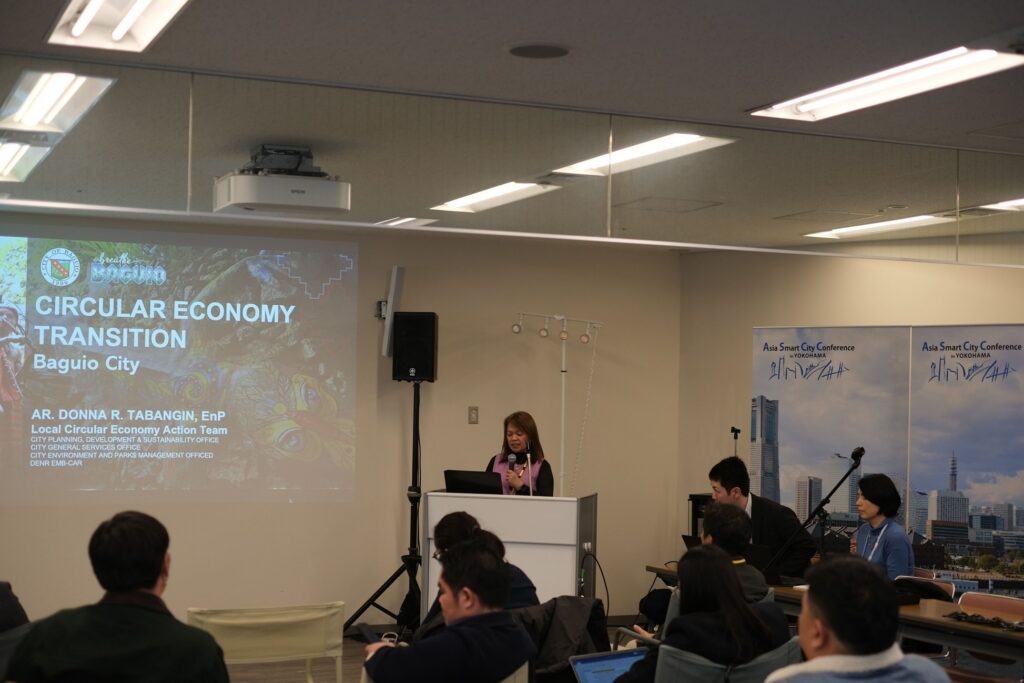
Presentation by Baguio City (the Philippines)
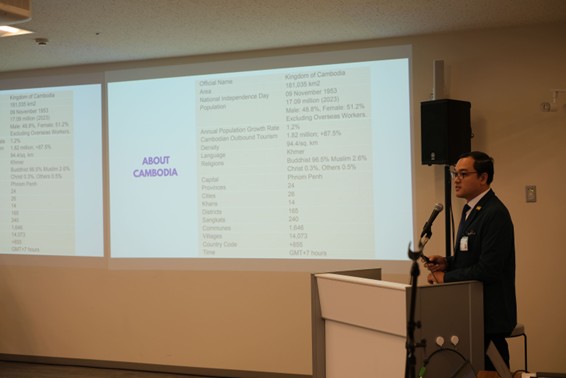
Presentation by the Ministry of Tourism of Cambodia
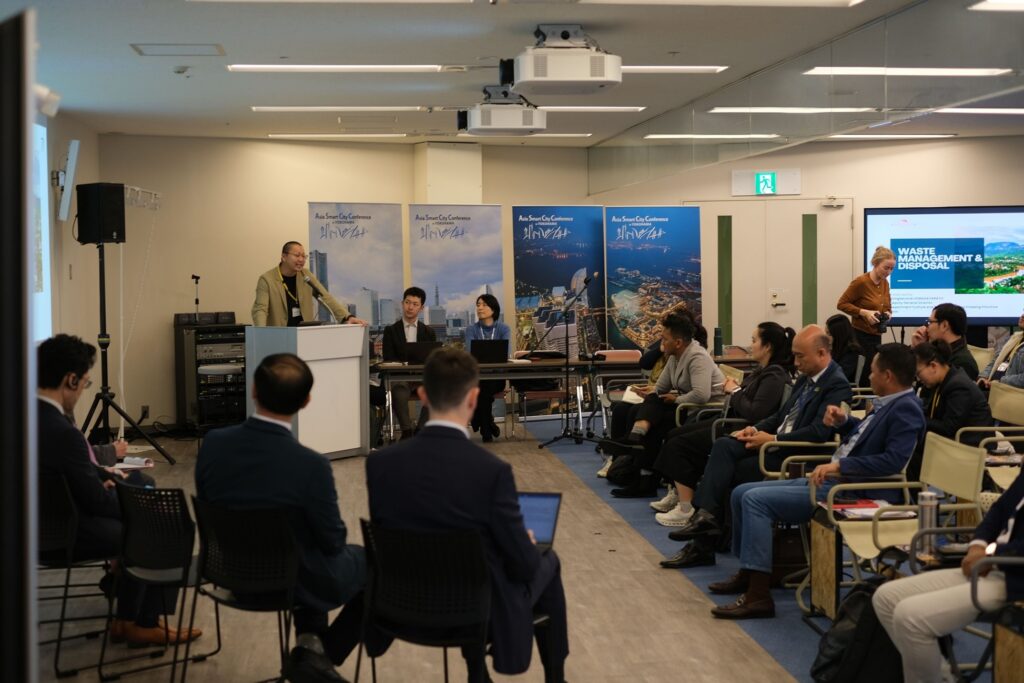
Presentation on behalf of Luang Prabang City (Lao PDR)
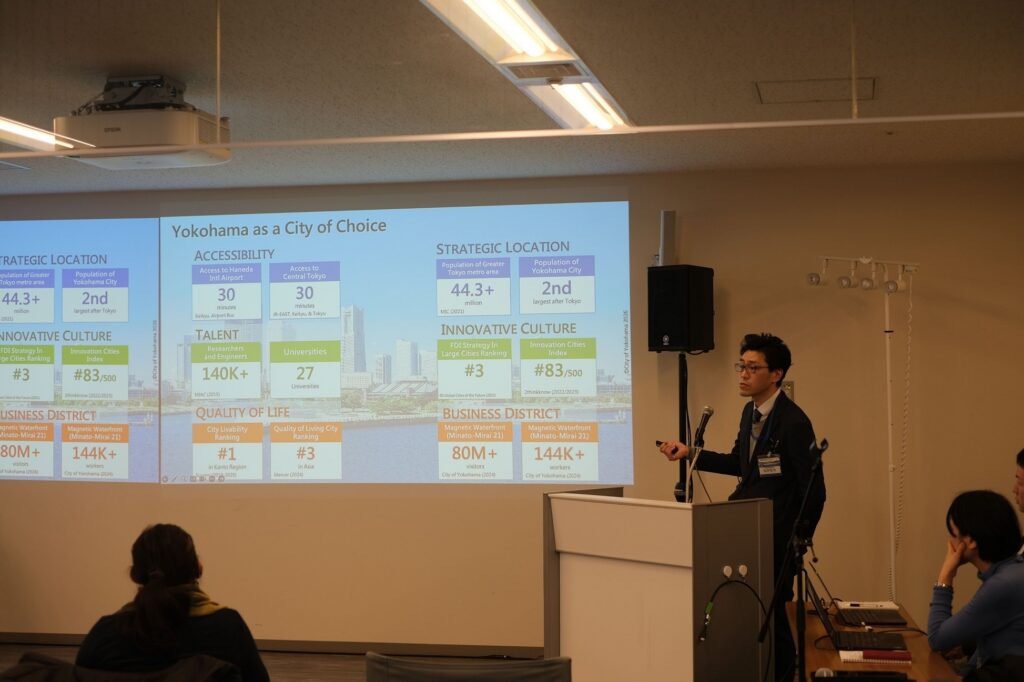
Presentation by International Affairs Bureau
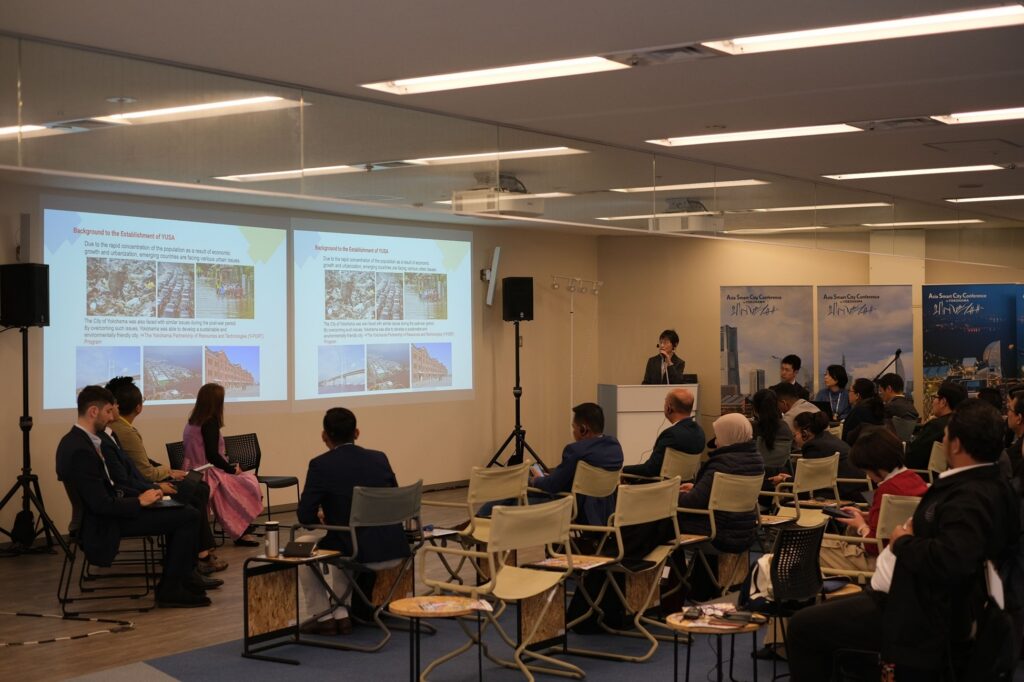
Presentation by YUSA
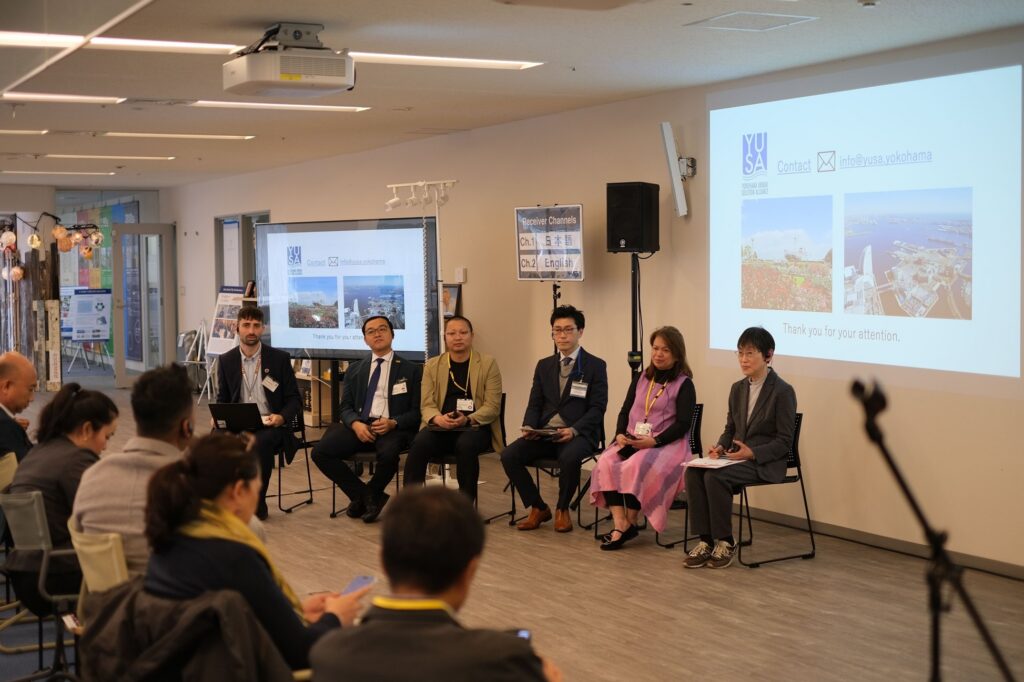
Q&A session of Session 2
🔳Session 3
Practical Cases for Circular Transition through Public–Private Partnerships
Session 3 showcased public–private partnership initiatives within Yokohama.
Resources and Waste Recycling Bureau introduced the Yokohama City Platform for Resource Circulation, established in collaboration with seven local waste management companies, and sustainability projects for zoos that have been commercialized through the platform.
PACIFICO Yokohama presented its initiatives as a MICE facility operator aiming for 100% recycling, including strict waste separation and horizontal bottle-to-bottle recycling. Following the lecture, a site visit was conducted, during which participants toured a collection station where waste generated from the facilities is gathered and sorted.
During the Q&A, participants asked detailed questions regarding upcycling costs and market viability, the role of local governments and regulatory conditions, waste collection strategies according to event scale at MICE venues, and operational processes for waste separation.
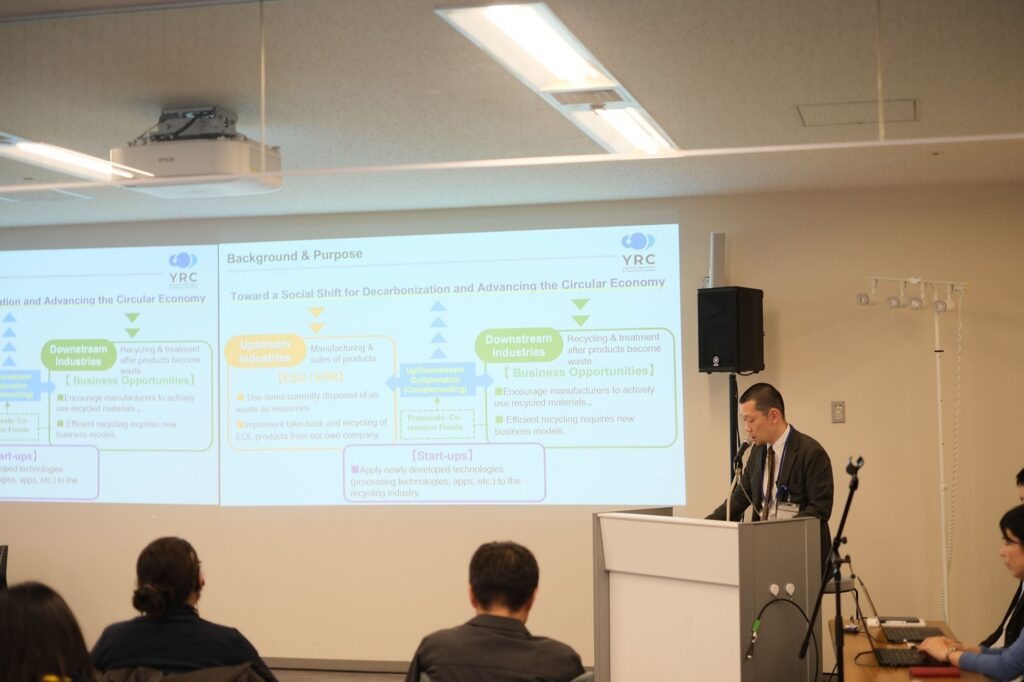
Presentation by Business Waste Management Division, Resources and Waste Recycling Bureau
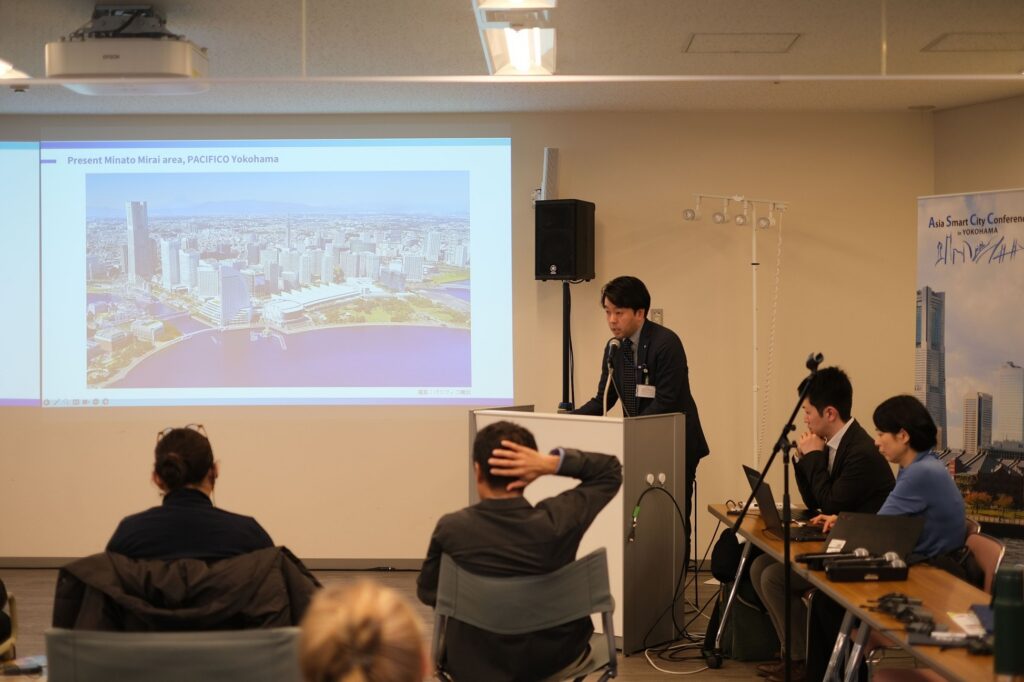
Presentation by PACIFICO Yokohama
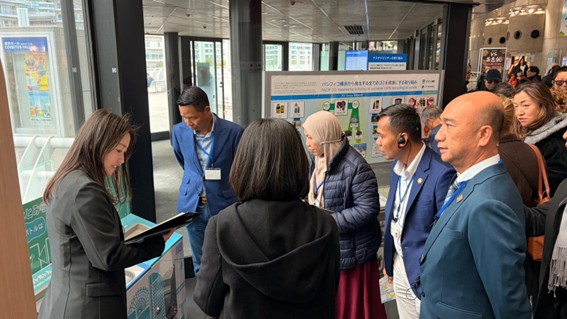
Site visit of PACIFICO Yokohama’s bottle-to-bottle recycling initiatives
🔳Technical Lecture
Institutional Frameworks and Technologies for Plastic Resource Circulation
In the technical lecture, J&T Recycling Corporation, a Yokohama-based company, systematically explained Japan’s legal framework for plastic recycling, including the Act on Promotion of Resource Circulation for Plastics. Advanced recycling facilities enabling bottle-to-bottle recycling and chemical recycling were also introduced.
Participants asked numerous questions regarding penalties for non-compliance, impacts and challenges of recent legal revisions, business profitability in recycling operations, and responsibility for recycling costs of imported products.
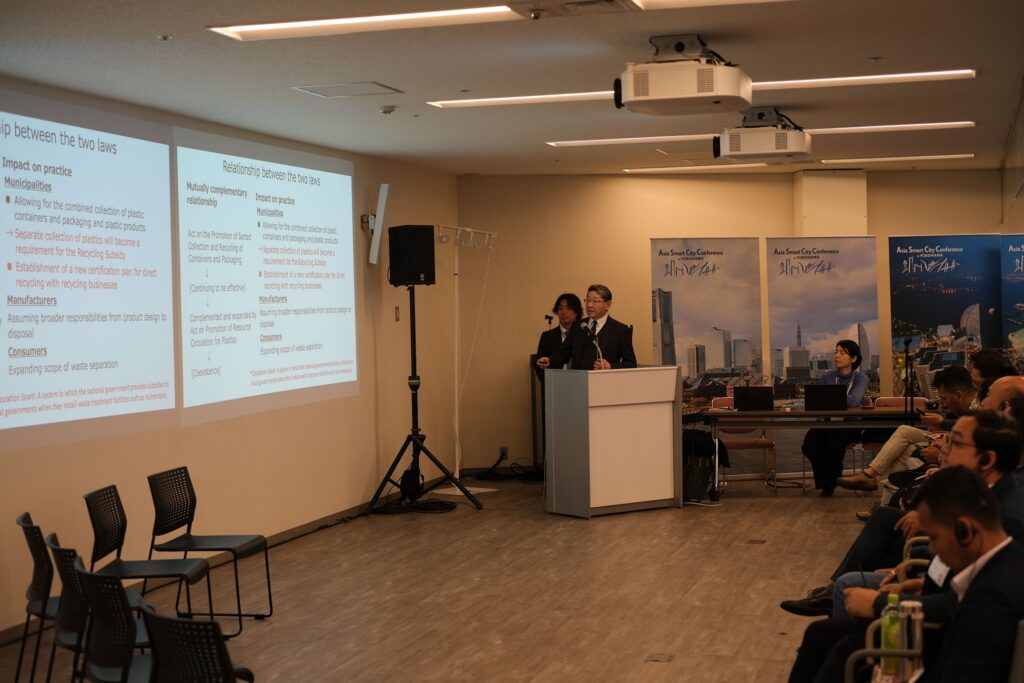
Presentation by J&T Recycling Corporation
🔳Conclusion
During this “Yokohama Day,” a wide range of examples was shared demonstrating how citizens, businesses, and local government work together—based on national policies—to realize a circular society.
Participating cities expressed strong interest not only in Yokohama’s initiatives and corporate efforts toward a circular society, but also in joining the ACCD and participating in the APCC-Forum.
Going forward, the City of Yokohama will continue to strengthen collaboration with international organizations such as UNDP and with cities across Asia, and actively disseminate its policies, local companies’ technologies, and best practices for realizing a circular society to the world.
Related posts:
 From Yokohama to Asia: Sharing Pathways for Circular Cities
 Yokohama Hosts “the 5th Net Zero Emissions Workshop” at Bangkok Climate Action Week
 The City of Yokohama’s Fourth Consecutive Participation in the “Visit Japan FIT Fair #17”
 Yokohama Presents its Green City Initiatives at 5th UN Forum of Mayors