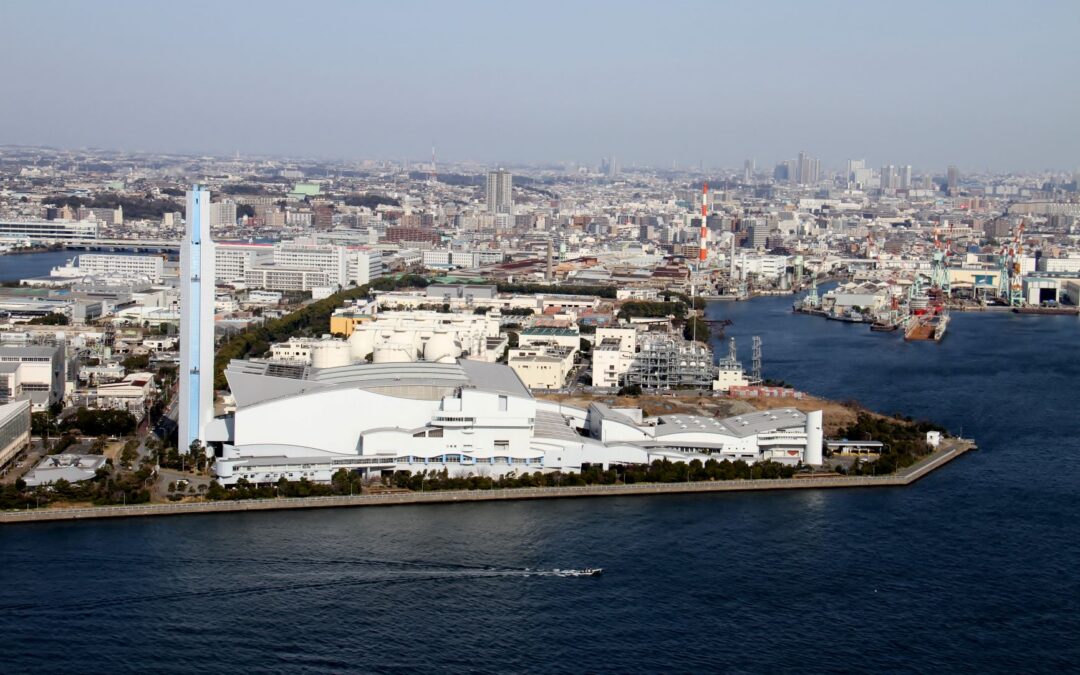
The City of Yokohama and Toagosei Co., Ltd. have launched a pilot project aiming to make effective use of steam generated during waste incineration, reducing fossil fuel consumption and cutting carbon dioxide emissions within the city. This represents a significant step forward in Yokohama’s efforts to advance decarbonization through innovative public–private collaboration.
The steam generated at waste incineration plants does not rely on fossil fuels and is therefore an environmentally friendly thermal energy source with zero CO₂ emissions. In this initiative, steam from the Tsurumi Plant will be supplied to the nearby Toagosei Yokohama Plant, which uses fossil-fuel-derived steam in the manufacturing of chemical products. We will evaluate the resulting CO₂ reduction effects of replacing fossil-fuel-based steam with CO₂‑emission‑free steam.
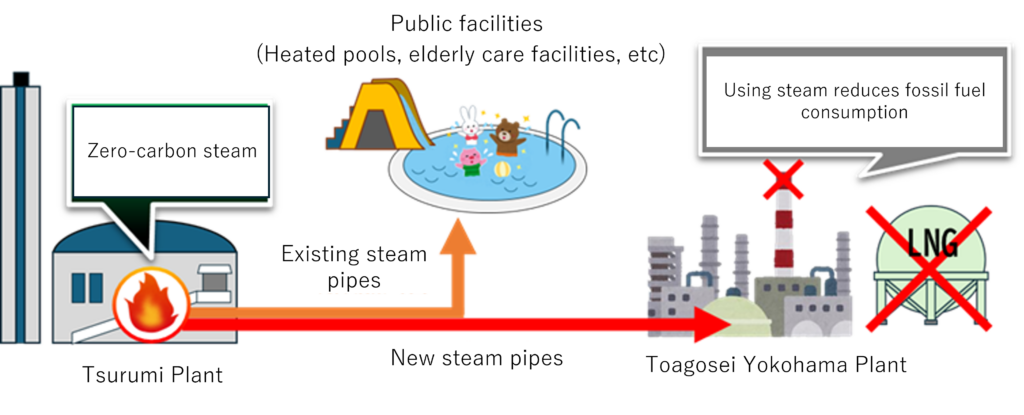
This initiative represents the first case in Yokohama City of supplying steam from a municipally operated waste incineration plant to a private company for the purpose of decarbonization. Even on a national level, similar examples are extremely rare, and this project is expected to serve as a model case for steam supply from waste incineration facilities.
Furthermore, waste-derived energy that does not rely on fossil fuels is expected to contribute to a stable energy supply system over the long term from the perspective of economic security, particularly in Japan, which has a high dependence on petroleum.
A feasibility study was launched in 2022, and the pilot project began in April 2026. The pilot is planned to last 12 years.
By demonstrating how municipal infrastructure can support industrial decarbonization, Yokohama seeks to establish a scalable framework that other cities can follow. The city will assess the pilot’s environmental and operational outcomes and consider future expansion as part of its long-term strategy toward carbon neutrality.
Related posts:
 Yokohama Featured in Brazilian Media — Highlighting Sustainability Initiatives Including GREEN×EXPO 2027
 Yokohama’s Circular Journey: How “Civic Power” is Building a Sustainable Future [Part 1]
 Yokohama Hosts “the 5th Net Zero Emissions Workshop” at Bangkok Climate Action Week
 Yokohama presents its green initiatives at the World Cities Summit Mayors Forum 2025