
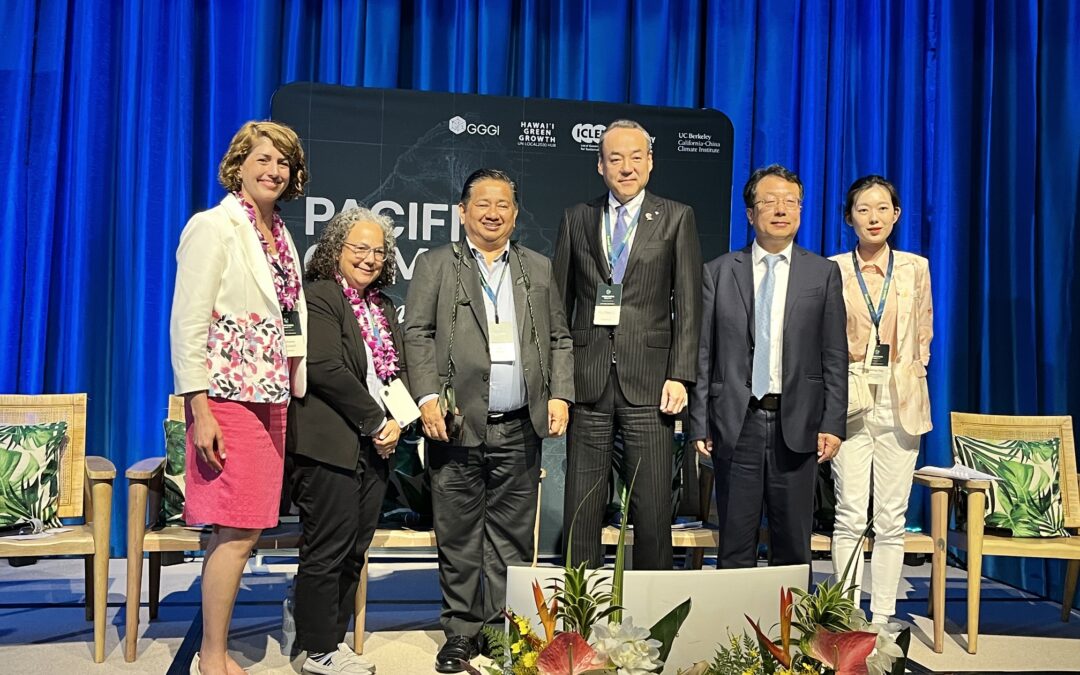
The Pacific Climate Summit 2026 was held for the first time in Honolulu, Hawaii, USA, from June 8–10, 2026. The summit brought together leaders from governments, local authorities, financial institutions, foundations, businesses, universities, and civil society organizations, primarily from the Asia-Pacific region, to discuss climate action, clean energy, innovation, and investment promotion. As the only Japanese municipal government participating in the summit, the City of Yokohama announced a new initiative to promote the transition to circular cities across the Asia-Pacific region.
The main objectives of the summit were to:
- Advance climate action and decarbonization across the Asia-Pacific region.
- Strengthen collaboration among cities, state governments, national governments, investors, and private-sector organizations.
- Promote investment in climate solutions, clean energy, resilience, and sustainable development.
- Foster new partnerships among public, private, and non-profit organizations.
The summit was hosted by Pacific Civic Exchange*, a non-profit organization founded by Dr. Fan Dai of the University of California, Berkeley, in partnership with organizations including the Global Green Growth Institute (GGGI), ICLEI – Local Governments for Sustainability, and New Energy Nexus. Throughout the conference, participants emphasized the growing role of subnational governments, such as cities and states, in leading national climate action and international cooperation. The discussions also highlighted that climate action should be viewed not only as environmental policy, but also as a driver of industrial development, investment attraction, innovation, and international city-to-city collaboration.
* Pacific Civic Exchange was established as an offshoot of the California-China Climate Institute.
Climate Leadership and the Role of Local Governments
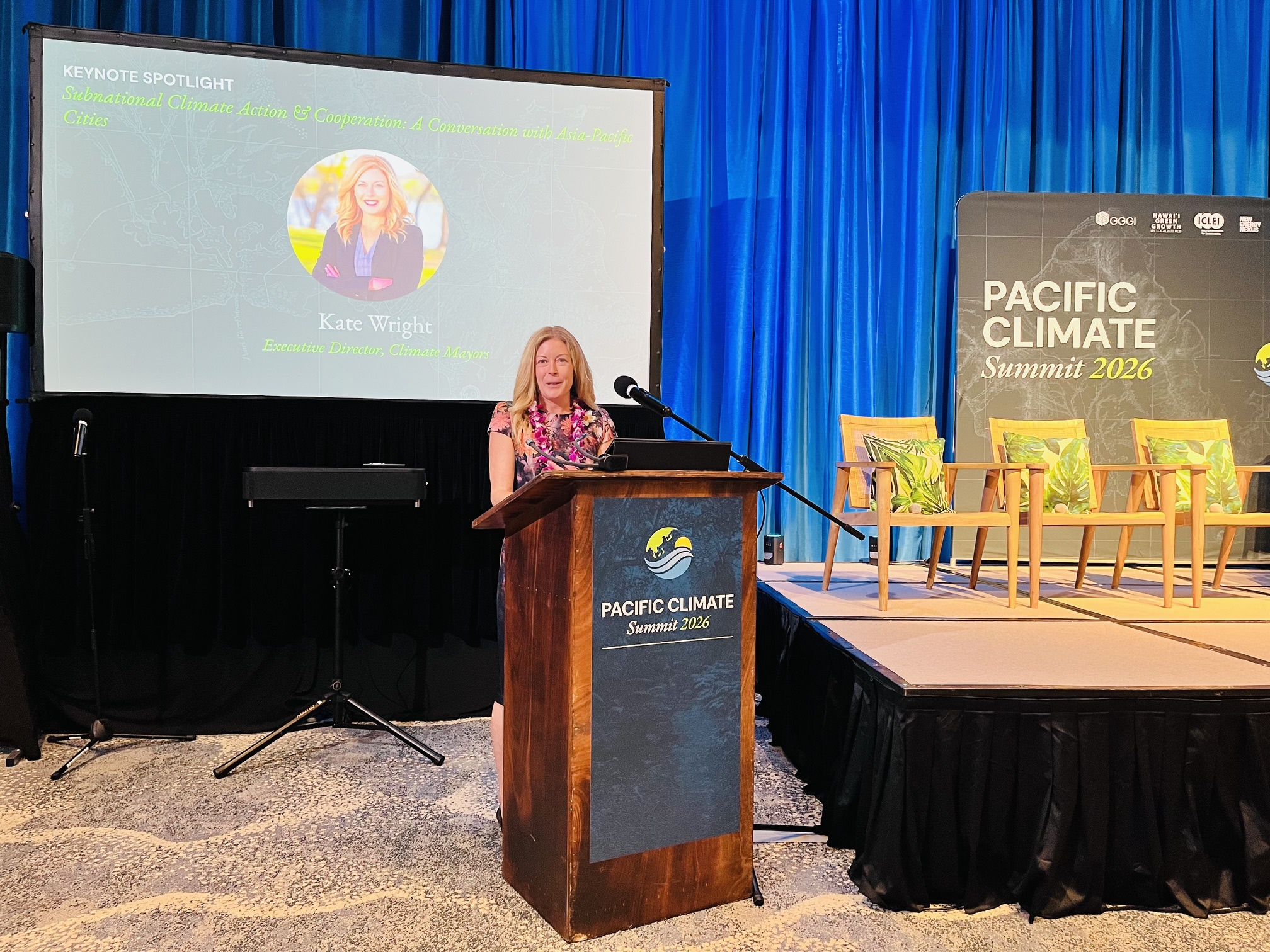
Deputy Mayor Sato of Yokohama participated as a panelist in the session titled “Subnational Climate Action & Cooperation: A Conversation with Pacific Cities” on June 9. In the keynote address, Kate Wright of Climate Mayors highlighted the continued progress of climate policies across U.S. cities and introduced leading initiatives in areas such as public transit electrification and clean energy deployment. She also showcased local examples, including Portland’s heat pump installation program and Boise’s urban tree-planting initiative, emphasizing the importance of nature-based solutions and affordable climate action.
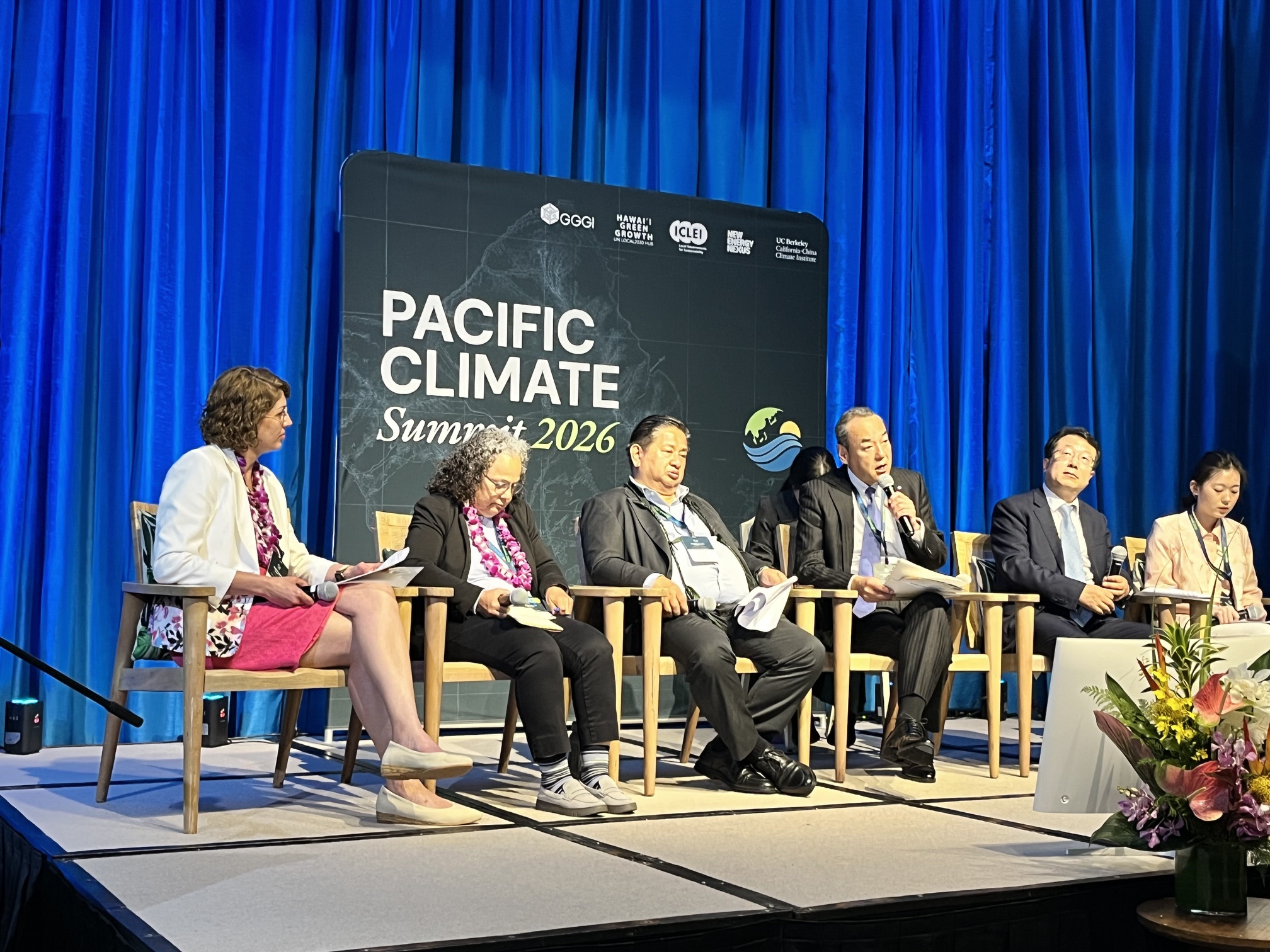
The panel discussion was moderated by Saharnaz Mirzazad, Executive Director of ICLEI USA, and featured representatives from Los Angeles (United States), Baguio (Philippines), Yokohama (Japan), and Changchun (China), who shared their cities’ initiatives and experiences.
- Los Angeles (United States): Pursuing carbon neutrality by 2045 through decarbonization efforts in the energy, transportation, and building sectors. The city has increased the share of renewable energy from 3% to approximately 50% while reducing its dependence on coal from 47% to zero.
- Baguio (Philippines): Promoting waste management under its Circular Economy Ordinance and utilizing black soldier flies to convert food waste into fertilizer.
- Yokohama (Japan): Advancing carbon neutrality through projects in the Minato Mirai 21 district while taking a leading role in promoting the transition to circular cities across the Asia-Pacific region (Asian Circular Cities Declaration, APCC-Forum).
- Changchun (China): Supporting China’s “Dual Carbon” goals (carbon peaking and carbon neutrality) through the promotion of new energy vehicles and ecosystem conservation.
The discussion also explored the impact and significance of subnational policies such as California’s Clean Car Program, the Low Carbon Fuel Standard (LCFS), and the Cap-and-Invest Program in driving market transformation and reducing greenhouse gas emissions. Participants further emphasized the importance of international city networks and partnerships, including the Asian Circular Cities Declaration (ACCD), which was established under Yokohama’s leadership, in advancing climate action. Strong interest was also expressed in GREEN × EXPO 2027, which will be held in Yokohama from March to September 2027.
Pacific Climate Summit:
https://pacificclimatesummit.rsvpify.com/
Asian Circular Cities Declaration (ACCD):
https://japan.iclei.org/en/asian-circular-cities-declaration-accd/
APCC-Forum:
Related posts:
 Yokohama Featured in Brazilian Media — Highlighting Sustainability Initiatives Including GREEN×EXPO 2027
 Yokohama’s Circular Journey: How “Civic Power” is Building a Sustainable Future [Part 1]
 Yokohama Presents its Green City Initiatives at 5th UN Forum of Mayors
 Yokohama presents its green initiatives at the World Cities Summit Mayors Forum 2025