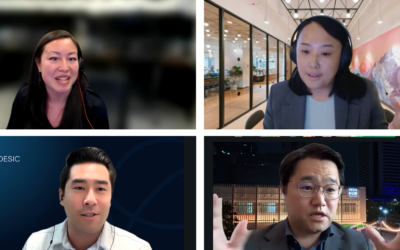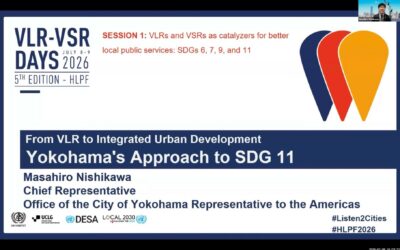
The ACCD was launched in November 2025 at the Asia Smart City Conference (ASCC) 2025 in Yokohama as a new regional framework to accelerate the transition to circular cities across Asia. The Declaration draws inspiration from Europe’s Circular Cities Declaration while reflecting the different priorities, capacities, and starting points of cities across Asia.

Togo Uchida, Executive Director of ICLEI Japan, explained that ICLEI Japan will be accepting applications for cities to become Founding Signatories of the ACCD through the end of March 2026. Founding Signatories will help shape discussions as the ACCD initiative consolidates, and will be featured on the ACCD website and in related promotional opportunities.
“Signatories will be able to promote their initiatives to the world through the reports by ACCD,” Uchida shared. “We would like the world to know what you are doing to realize circularity and strengthen your access and recognition as a leading city on circularity.”
The ACCD is designed to support that shift while respecting local realities. It is intentionally designed to be not legally binding. Instead, it sets shared goals and encourages cities with different histories and socio-economic contexts to learn from one another, compare approaches, and build up their capacities over time.
The Declaration defines circular cities as those that advance the shift from a linear to circular economy across city functions and, by collaborating with citizens, businesses, and the research community, work to maintain product and material value for as long as possible, closing loops, and minimizing waste. It also calls on signatories to embed circularity into their urban planning and infrastructure management, collaborate with national and regional partners, track impacts, and report progress on a regular basis.
Signatories can demonstrate leadership alongside other leading cities, strengthen policymaking through shared knowledge and reporting, and increase international influence by speaking out collectively. They can also access support from ICLEI’s offices and partners, deepen dialogue with private-sector stakeholders, and communicate their progress globally through ACCD reports.
ICLEI Japan also highlighted opportunities such as networking with other cities, peer learning and training, participation in international meetings, access to supporting organizations’ initiatives, and potential financial support opportunities through partners. According to Uchida, “There’s a lot of opportunities for local governments to systematically access these interests by donors, organizations, and research institutes, to really deepen the understanding of how to become circular and, therefore, to help the local government policy-making process.”

Ivonne Bojoh, CEO of Circle Economy, at Asia Smart City Conference 2025.
Ivonne Bojoh from Circle Economy also shared her insight into Europe’s Circular City Declaration during the conference. Since each city is at a different stage of progress, she believes that cities will need to find a shared understanding of circular principles, strategies, and metrics, and to focus on alignment, education, stakeholder engagement, and collaborative learning in order to advance circular economy goals.
Additionally, Bojoh emphasized how cities are stronger together: “One of the benefits of working together is not just to signal to your stakeholders that you want to become more circular, to signal to your investors that you want investment for circular projects, but also to show the progress, both in a positive and in a negative way. Also sharing the challenges that you encounter is very valuable for other cities that might learn from you. And it’s the sharing between cities that is the most valuable asset of being in such a declaration.”
Insights from three cities and their advancement towards circularity
Three guests were also invited to share their circular initiatives.
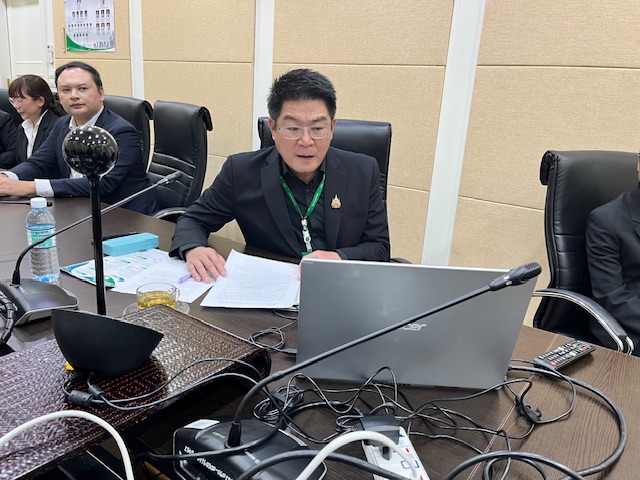
Thosapol Suparee, Deputy Director, General of Environment Department from Bangkok Metropolitan Administration (BMA)
First was Thosapol Suparee from Bangkok Metropolitan Administration (BMA). The Bangkok Master Plan on Climate Change 2021–2030 guides BMA’s circular initiatives, alongside related waste and wastewater action planning, and a citywide target to reduce at least 10.15 million tons of CO2 equivalent.
To cut waste at the source and raise public participation, BMA highlighted two practical initiatives: a “recycling market” approach that strengthens separation and collection, and organic waste programmes that turn food and green waste into compost. One flagship example is Bangkok Magic Hands, a plastic separation initiative where collected plastics are upcycled into uniforms for street cleaning staff, linking material recovery with improved worker safety.
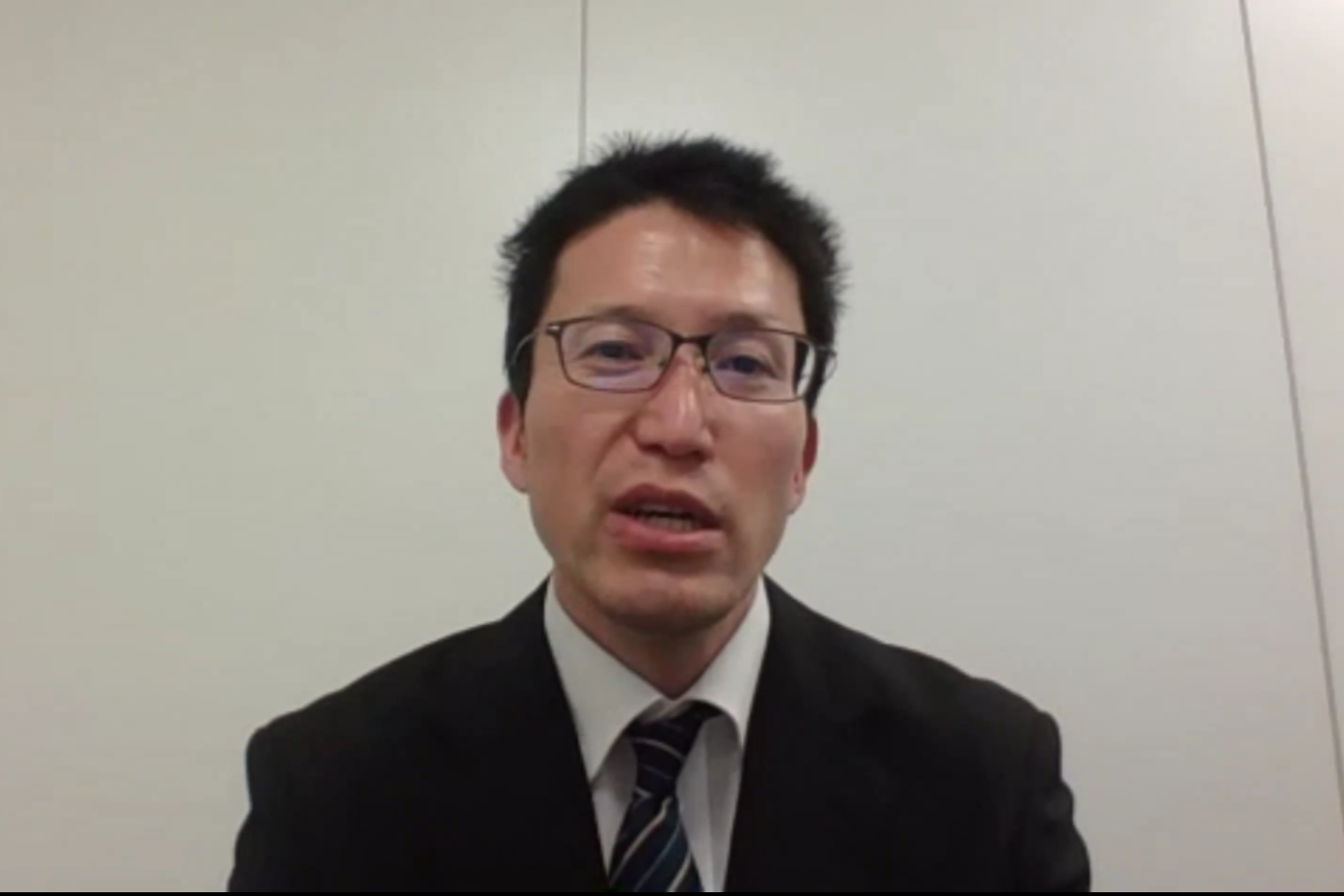
Takaaki Ito, Executive Director of Zero Carbon and GREEN x EXPO Promotion Bureau from City of Yokohama.
Takaaki Ito from City of Yokohama took the stage next. He shared how long-term waste reduction has been achieved not only through systems and infrastructure, but through sustained behaviour change by residents, leading to a sharp decline in household waste even as the population grew.
Building on this foundation, the city is now expanding from waste reduction into a broader circular economy agenda aimed at creating economic value while reducing resource use. Recent initiatives include measuring material inflows and outflows in a central business district to identify priority action areas, circulating food waste as compost for urban agriculture, strengthening collaboration between manufacturers and recyclers through business matching, and supporting small and medium-sized enterprises to adopt circular management practices.

Maribel D. Marquez, Environmental Management Specialist from the Climate Change and Environmental Sustainability Department of Quezon City Government.
Next, Maribel D. Marquez from the Climate Change and Environmental Sustainability Department of Quezon City Government shared the latest from Quezon City. She described a circular economy portfolio embedded in its Enhanced Local Climate Change Action Plan, with actions designed to deliver mitigation, adaptation and equitable benefits.
The city has scaled incentives and community access through its Trash to Cash Back programme, which rewards recycling with points redeemable for groceries and utility bills, supported by a wide network of trading booths and regular events. It also highlighted systems for reuse and refill, including partnerships that expanded refilling hubs in sari-sari stores and reduced single-use sachets, alongside textile and tarpaulin upcycling initiatives that create livelihoods.
Quezon City has also deployed biodigesters and composting methods linked to urban farming, while food rescue partnerships help redirect surplus edible food to communities facing food insecurity.
Strong cities, stronger together: approaching issues through mutual learning and partnerships
Representatives from ICLEI Southeast Asia and ICLEI Korea also shared their regional perspectives, giving participants insight into current on-the-ground progress.

Ricardo Marfiga Jr., Membership, Governance, and Circular Economy Manager at the ICLEI Southeast Asia.
Ricardo Marfiga Jr. from the ICLEI Southeast Asia said progress varies widely across the region, but momentum is building.
ASEAN already has a regional circular economy framework, while several governments have developed national approaches. Examples include Indonesia’s circular economy roadmap and action plan through 2045, Malaysia’s development plan aligned with Sustainable Development Goals with a strong focus on solid waste management, Thailand’s bio-circular-green economy model, and Vietnam’s national circular economy action plan for the next decade. In the Philippines, a draft for a national circular economy framework developed with UNDP remains under review across multiple agencies.
Marfiga said he hopes to bring more cities into the ACCD. “Exchange between cities helps them understand each other’s starting points and priorities. When a city is doing well in a particular sector, it can provide a reference for others and help form partnerships between cities.”

Quedahm Chin, Programme Officer for Circulars Green Transition at ICLEI Korea.
From ICLEI Korea, Quedahm Chin explained that ICLEI has been building domestic foundations for circular cities through C-LEAD, an action group that convenes selected local governments for peer learning, policy exchange and practical support, including green public procurement and capacity building.
In 2026, ICLEI Korea plans to connect its foundational work more directly to the Asian Circular Cities Declaration by shifting outreach and engagement toward the ACCD as the primary regional platform. The timing is significant because Korea’s national Act on Promotion of Transition to Circular Economy and Society came into effect in late 2024 and was revised in 2025, raising expectations for local governments to develop and implement circular economy plans.
Chin described how the ACCD can help cities navigate the transition. “Moving toward a circular city can feel overwhelming. Cities often face limited resources, a lack of clear methods, and uneven implementation. However, the ACCD is not legally binding, and can offer guidance on more holistic approaches, including small, practical steps. The Declaration can bring local governments together to identify shared issues and move the transition forward.”
Both speakers welcomed the strong turnout and interest in the ACCD. They said they look forward to bringing more cities and local governments into the conversation, strengthening communication efforts, and reducing language barriers.
Asian Circular Cities Declaration as shared language for Circular Action
Becoming a signatory is only the first step. The ACCD aspires to grow into a bigger platform for collaboration and action.
Beyond how ACCD signatory status can signal commitment to stakeholders, Bojoh noted that cities across Asia are at different stages and may even define “circular economy” differently. She emphasized, “ACCD’s added value to different multi-city or multinational programs is creating that common language so that we all have an understanding of the same circular principles and the strategies. It’ll help financial institutions invest in circular strategies and showcase the benefits of circularity as a priority to stakeholders.”
Asked where cities find motivation to move forward, Ito said Yokohama builds on a long history of convening cities through the Asia Smart City Conference and a desire to deepen cooperation through an ongoing framework rather than one-off exchanges. “Addressing climate change, biodiversity loss, pollution, and resource circulation requires a circular economy approach, but that progress can be more complex than climate action alone because it involves many sectors and stakeholders. That is why we would like to learn from other cities, which may have similar opportunities and challenges to those that we are facing.”
On regional frameworks, speakers noted that ASEAN already has a circular economy framework, but developing a single, unified approach remains difficult. In practice, they said the focus should be on helping cities identify clear entry points for circular action. They also said that they want to focus on cities where strong national frameworks exist but implementation remains challenging, and local governments are looking for practical guidance to move beyond a recycling-heavy model toward approaches that shift citizen behaviour and strengthen circular purchasing and procurement in everyday life.
Although the ACCD draws inspiration from Europe’s Circular Cities Declaration, The ACCD can strengthen coordinated actions and speed up implementation through collaboration. I also believe that cities can often move faster than national governments because they are closer to residents and can act more independently through local policies, investments, and community-based initiatives, so cities can power this shift.”

Invitation to Join the ACCD, next steps toward APCC-Forum 2026
The session concluded by building on the momentum established at ASCC 2025, where Yokohama signed on as the first ACCD signatory and city leaders from across Asia called for a regional declaration framework, backed by international institutions and partner organizations.
Looking ahead, the first major in-person gathering of ACCD signatories will take place at the Asia-Pacific Circular Cities Forum (APCC-Forum) in Yokohama on September 2–4, 2026.
Cities can become Founding Signatories by signing the declaration or notifying ICLEI Japan of their interest by the end of March 2026. Organizers encouraged cities to stay engaged as the signatory community grows and prepares for the inaugural APCC-Forum meeting.

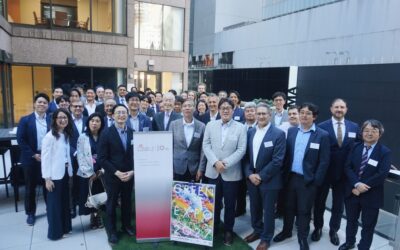
Ending on a high note with a group photo
[Footnote]
* ASCC will be relaunched in 2026 as the Asia-Pacific Circular Cities Forum (APCC-Forum), a knowledge-sharing platform for ACCD signatories and beyond.
Related links:
Calling for Signatories: Asian Circular Cities Declaration (ACCD)
https://japan.iclei.org/en/asian-circular-cities-declaration-call-for-city-partners/
(Article) Yokohama leads Asian Circular Cities Declaration as first signatory at ASCC 2025
Related posts:
 Yokohama Business Attraction Seminar held in Frankfurt
 Yokohama’s Circular Journey: How “Civic Power” is Building a Sustainable Future [Part 2]
 The City of Yokohama’s Fourth Consecutive Participation in the “Visit Japan FIT Fair #17”
 Booth Exhibition at the 2nd “International Education & Career Fair” at Kasetsart University