
Minato Mirai 21, Yokohama’s leading waterfront district supporting innovation and sustainable city initiatives.
Reducing household waste by 43% in a massive, growing metropolis is no small feat. This is one of Yokohama’s landmark achievements born from the collaboration between the City of Yokohama and its citizens.
Behind this figure is not a story of high-tech innovation, but a record of persistent, grassroots collaboration. Through more than 15,000 dialogues between the municipal government and its citizens, Yokohama achieved large-scale behavioral change. This effort helped shift the daily habits of approximately 3.5 million residents, representing nearly the entire population of the city at the time.
This experience, where the city and its citizens worked together to drive behavioral change, forms the bedrock of Yokohama’s circular economy strategy.
In this two-part series, we explore Yokohama’s progress to date and its vision for the future. While the path has not always been smooth, we share our experiences and challenges in the hope of fostering learning and partnership with cities worldwide that aspire to become circular hubs.
In this first installment, we introduce the cultural background of our journey and the history of resource circulation driven by civic-public collaboration. How did Yokohama evolve into a city now poised to provide collaborative leadership in Asia’s circular economy?
From a Port City to Modern Japan: Cultivating an Open Spirit and Civic Pride
Yokohama’s roots as a modern city date back to the mid-19th century.
At the time, Japan had maintained a policy of national isolation (sakoku) for over 200 years. That period ended in 1853 with the arrival of Commodore Matthew Perry of the U.S. Navy. The event led Japan to reopen its doors to the world, and Yokohama, then a tiny fishing village of a few hundred people, was chosen as the nation’s first international trade port.

Painting: “Reception at Yokohama Village, February 1854.” Photo courtesy of Yokohama City Central Library
Since its opening in 1859, Yokohama has served as Japan’s gateway to modernization, developing into a dynamic city where people, goods, and cultures constantly intersect. On April 1, 1889, the municipality was officially incorporated as the City of Yokohama.
Unlike many Japanese cities that originated as castle towns ruled by feudal lords, Yokohama was built from the ground up by merchants and pioneers from across Japan and the world. Its history as a newly opened port shaped a free and open-minded culture that embraces diverse values and change without being bound by old customs.
This history has cultivated a deep sense of ownership and affection for the city, known as “Civic Pride.” According to the 2023 Yokohama City Resident Opinion Survey, about 70% of residents feel attached to Yokohama or proud of their city. This high level of engagement is the “citizen power” that fuels our urban potential.
Today, this spirit serves as the foundation for our proactive approach to international partnerships and city-to-city collaboration.
The Waste Crisis: The Starting Point of Circular City Yokohama
Following the end of World War II in 1945, Yokohama experienced explosive population growth. During Japan’s period of rapid economic growth in the 1960s and 70s, factories expanded along Yokohama’s coastal areas, in part because of its proximity to Tokyo. As people flocked to the city, vast residential areas were developed. While this provided housing for millions, the rapid urbanization placed an immense strain on infrastructure.
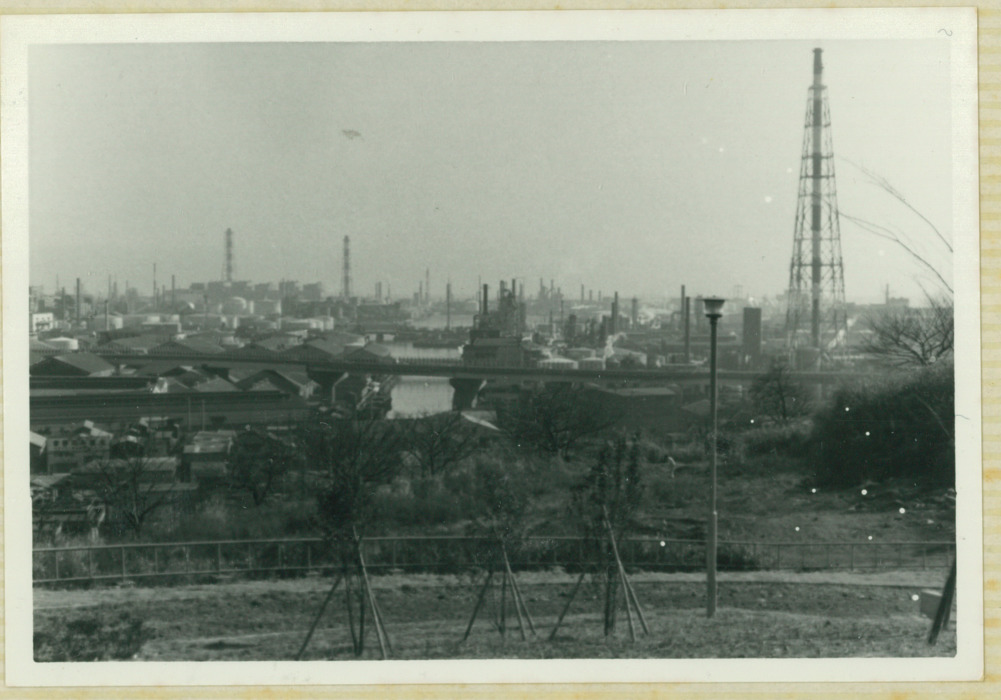
View of the Keihin Industrial Zone from National Route 1 in 1977. Photo courtesy of Yokohama City Central Library
By the early 2000s, the sheer volume of waste generated by increasingly affluent lifestyles had become a serious threat to urban sustainability. The city faced a looming crisis: landfill sites were rapidly nearing capacity.
In response, the City of Yokohama formulated the Yokohama G30 Plan (G for gomi, Japanese for waste) in January 2003. This ambitious master plan for waste management set a goal to reduce waste by 30% by fiscal year 2010, compared with fiscal year 2001 (excluding recyclables).
Achieving such a drastic reduction in a growing city required sustained dialogue and behavioral change.
The G30 Legacy: Dialogues for Resource Circulation
In Japan, municipalities are responsible for managing household waste, and they also set their own rules for waste separation. *

A waste collection point
As the core of the G30 Plan, the City of Yokohama made a bold decision to expand waste sorting categories from 5 categories (7 items) to 10 categories (15 items). It was a fundamental shift: items previously labeled as “combustible waste” were redefined as “valuable resources.” For example, plastic trays and bottles had to be washed and sorted as “plastic packaging,” while newspapers and magazines had to be bundled as “used paper.”
However, while more detailed sorting rules inevitably placed a greater burden on citizens, their widespread adoption in Yokohama was made possible through close collaboration between the city administration and local residents.
To build this collaboration, the City of Yokohama partnered with Neighborhood Associations (jichikai and chonaikai), which serve as the backbone of local communities. These autonomous, resident-led groups play a vital role in everyday community life, strengthening social ties and supporting local well-being. Their activities range from organizing cultural events that encourage daily communication and mutual trust, to managing essential initiatives such as neighborhood clean-ups, social welfare support, and disaster preparedness. Yokohama has more than 2,800 Neighborhood Associations, collectively covering approximately 1.2 million households.
Working closely with these associations, the city organized a citywide outreach program to explain the new sorting rules and encourage behavioral change. All city staff involved in the G30 Plan shared a strong sense of responsibility and worked together as one to advance public outreach efforts. They believed that meeting residents face to face was the most effective way to ensure clear understanding.
With a wide variety of handmade demonstration materials in hand, city staff repeatedly visited communities to hold workshops and engage directly with residents. By the end of the campaign, approximately 15,000 workshops had been conducted citywide.
In parallel, city offices handled a steady stream of inquiries from residents during the early stages of implementation. Staff responded patiently and individually to questions and concerns, reflecting the high level of public engagement around the new rules.
At the same time, city officials went out into local communities and took the lead on the ground, standing early in the morning at railway stations and waste collection points to personally ask for citizens’ cooperation as the new rules were introduced. G30 was also promoted through every available channel, including printed materials and even a dedicated theme song played from waste collection trucks, reinforcing the message throughout the city.
Reflecting on the process, one city official recalled, “We believed that the best way to explain sorting clearly was to meet residents in person. With the support of Neighborhood Associations and local environmental volunteers, we continued holding workshops even at night and on weekends while distributing flyers and working side by side with the community. This initiative would not have been possible without the cooperation of local residents, and through this shared effort, understanding and participation gradually spread.”
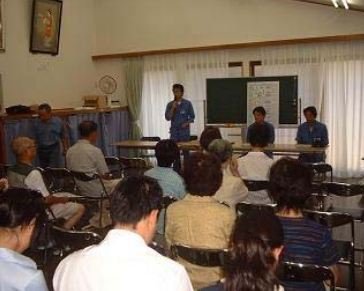
Workshop with citizens
The results were transformative. Despite an 8% increase in the city’s population over the course of the plan, waste fell by 43%. Yokohama met its 30% reduction target in 2005, five years ahead of schedule. This success allowed the city to suspend three of its seven waste incineration plants.
The trust built through these 15,000 dialogues proved that civic collaboration is one of the most powerful tools for Yokohama’s transition.
From Reduce to Circulate: Evolution of Yokohama’s 3R Spirit
The environmental awareness cultivated during the G30 era remains one of our greatest assets. This spirit has shaped current policies, including the Yokohama 3R Slim Plan (2010-2025) and the Yokohama Plastic 5.3 Plan (2023-2030,) which focuses on decarbonization and the transition into a circular economy.
The Plastic 5.3 Plan aims to reduce plastic waste in the combustible stream by 20,000 tons by fiscal year 2030 (compared to 2022). That equals 5.3kg of plastic per resident annually. To enhance the quality of resource circulation and accelerate the transition to a circular economy, in 2024 we introduced new sorting rules to collect rigid plastic products, including toothbrushes and toys, as recyclable resources.
To communicate these changes, we combine the “boots-on-the-ground” approach from the G30 era with modern digital marketing. The name “5.3” is a Japanese wordplay on “gomi” (meaning “waste”), making the policy more approachable for the public.
New Frontiers: Partnering with the Resource Circulation Industry
Beyond civic engagement, Yokohama is expanding its partnerships by engaging with the private sector through the Yokohama City Platform for Resource Circulation (YRC Platform).
Launched in 2024 after a year of discussion between the City and seven key regional waste management companies in Yokohama, this platform connects “arterial” industries (such as manufacturing and distribution sectors) with “venous” industries (such as waste management and recycling ). , the platform handles 20 to 30 consultations annually,
A notable example took place in August 2025, when a local hotel and a zoo collaborated to use surplus buffet food as animal treats. Other ongoing projects include creating recycling businesses and efficient resource collection systems.
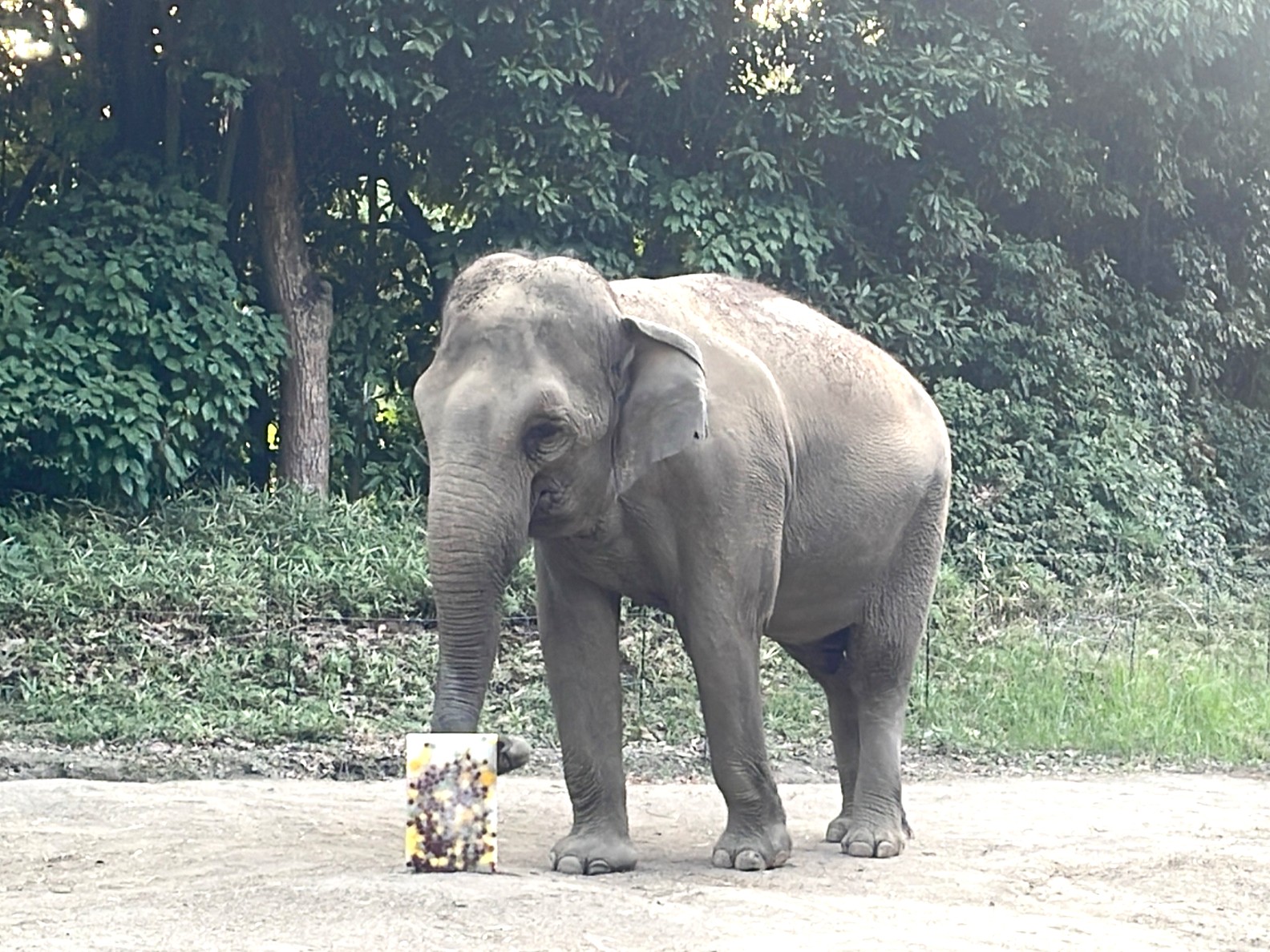
An Indian elephant enjoying a frozen treat made from surplus fruit provided by a local hotel (Yokohama Zoological Gardens “Zoorasia”)
Global Collaboration: Sharing Knowledge with Asia and the World
Yokohama’s experience in participatory waste management and urban governance has become a valuable resource for cities across Asia.
In 2009, the World Bank recognized Yokohama as one of the first six cities worldwide to demonstrate success under its Eco2 Cities initiative, which promotes synergy between environmental sustainability and economic vitality. Yokohama’s work in waste reduction and civic engagement has served as a primary subject for training programs and case studies conducted by the World Bank, Asian Development Bank, and Japan International Cooperation Agency (JICA). These programs have brought administrative officials and technical experts from around the world to Yokohama to study practical solutions to urban challenges.
Yokohama also partners with the World Bank Tokyo Development Learning Center, the Asian Development Bank, and the Asian Development Bank Institute to support knowledge sharing and human resource development. This is achieved through collaboration at the Asia Smart City Conference (ASCC) and various city-to-city partnership frameworks.
Together, these commitments to international dialogue and collaboration are a vital pillar that supports Yokohama’s evolution as a circular city.
A Creative Future Built on Trust
The culture of collaboration between citizens, businesses, and the administration is accelerating Yokohama’s transition into a fully circular city.
In our Mid-term Plan (2026–2029), which is currently under development as of January 2026, the “Transition to a Circular City” is positioned as a core cross-departmental strategy. Furthermore, at ASCC 2025 in November, Yokohama became the first signatory of the Asian Circular Cities Declaration (ACCD), launched by ICLEI Japan.
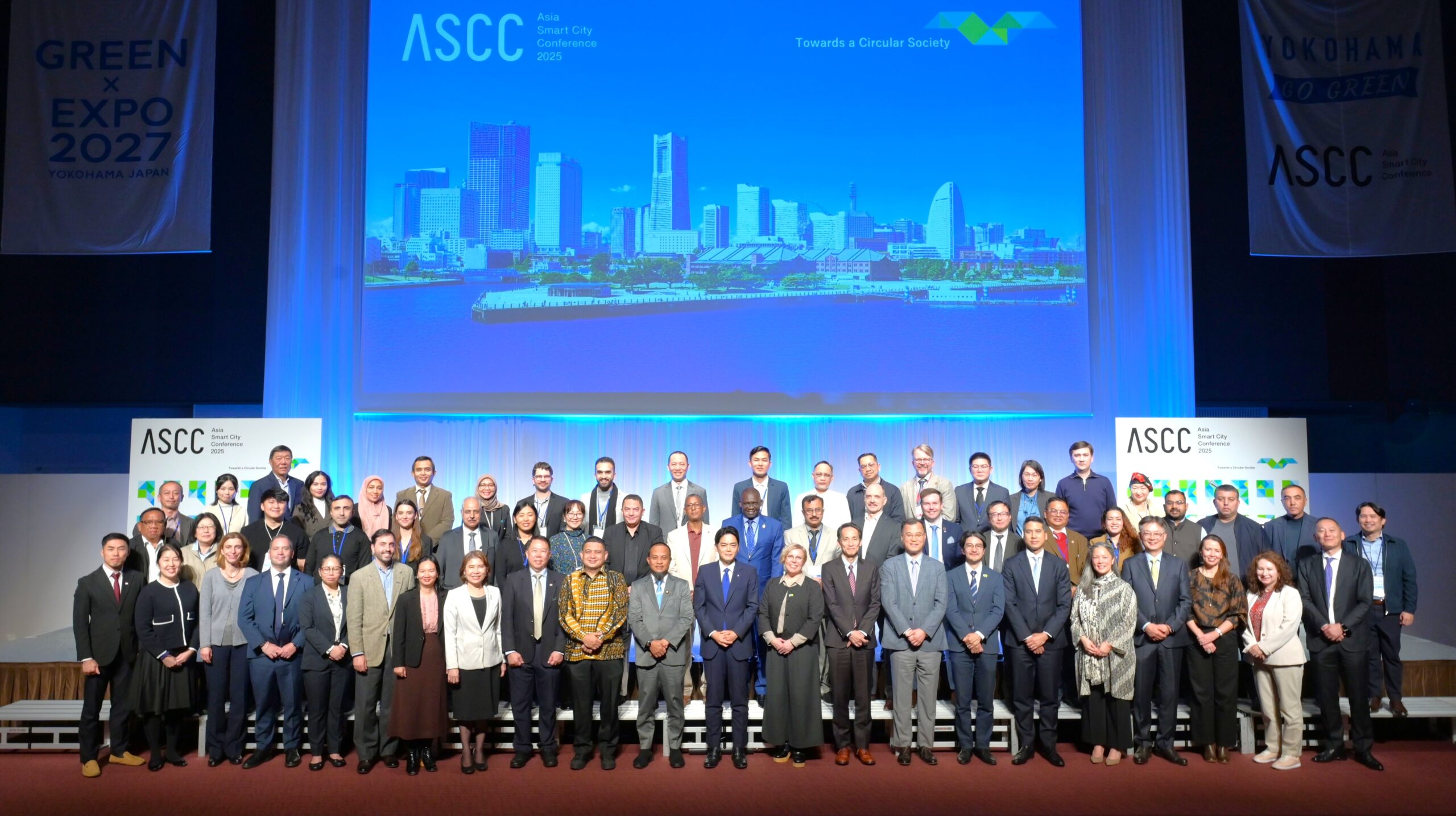
Group photo taken at the end of ASCC 2025, which included ICLEI Japan’s announcement of ACCD.
Yokohama’s circular economy efforts are no longer isolated projects; they are a unified urban strategy and a key component of our international network.
By leveraging our deep-rooted history and experience, Yokohama’s collaborative urban development with diverse stakeholders is now entering a new phase that accelerates transition toward a truly circular city.
How is Yokohama leveraging its heritage to design the city of tomorrow?
In the second part of this series, we will share concrete examples of circular-focused urban development led by various city departments. These include revitalizing heritage buildings through creative approaches and public-private pilot projects in leading business districts.
Read Part 2: From Yokohama to Asia: Sharing Pathways for Circular Cities
[Footnote]
* In Japan, waste is classified into “industrial waste” and “municipal solid waste.” Municipal solid waste is further divided into “household waste” and “business waste.” Excluding business-related municipal waste, municipalities are responsible for managing general household waste. Each municipality also establishes its own rules for waste separation.
[Reference]
City of Yokohama
- City of Yokohama. (n.d.). Population and household trends in Yokohama City.
https://www.city.yokohama.lg.jp/city-info/yokohamashi/tokei-chosa/portal/opendata/jinko-setai-suii.html - City of Yokohama. (n.d.). Yokohama G30 Plan: General waste management master plan.
https://www.city.yokohama.lg.jp/city-info/yokohamashi/org/shigen/sonota/hoshin/g30/index.html
- City of Yokohama. (n.d.). Yokohama 3R Slim Plan: Promoting the 3Rs for a sustainable future.
https://www.city.yokohama.lg.jp/city-info/yokohamashi/org/shigen/sonota/hoshin/3r-plan/index.html
- City of Yokohama. (n.d.). Yokohama Plastic 5.3 (Gomi) Plan: Strategy for plastic resource circulation.
https://www.city.yokohama.lg.jp/city-info/yokohamashi/org/shigen/sonota/hoshin/plan-2030/ - City of Yokohama. (2024). Yokohama City Mid-term Plan 2026–2029 (Draft) [PDF].
https://www.city.yokohama.lg.jp/city-info/seisaku/torikumi/shisaku/mid-term-plan/soansassi.pdf
Community & Neighborhood Organization
- Yokohama City Neighborhood Association Federation. (n.d.). Introduction to Neighborhood Associations (Jichikai-Chonaikai) in Yokohama.
https://yokohama-shirenkai.org/jichikai-syoukai/
Related posts:
 From Yokohama to Asia: Sharing Pathways for Circular Cities
 Yokohama Hosts “the 5th Net Zero Emissions Workshop” at Bangkok Climate Action Week
 New Global Toolkit Highlights Yokohama as Leading Example of City-Led Diplomacy
 Yokohama presents its Circular City Initiatives at the 4th Sustainability Week Asia